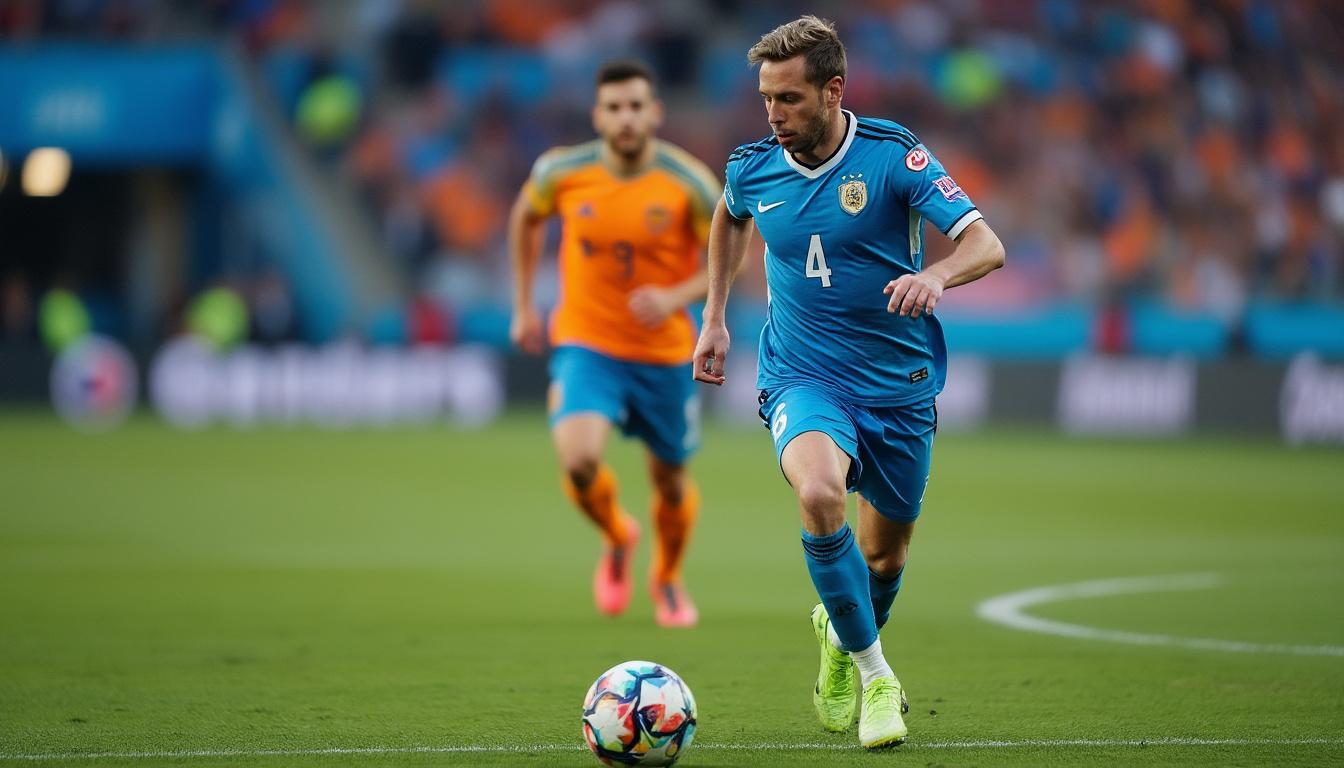
The UEFA Champions League this season has been a thrilling showcase of tactical genius, relentless attacking, and creative brilliance. As Europe’s finest clubs lock horns on the grandest stage, one metric stands out in illuminating the true architects behind the spectacle: chances created per match. This statistic reveals the pace-setters who transform possession into goal opportunities, who craft the moments of magic that can change a game in an instant. From dazzling midfield maestros to explosive forwards, understanding which clubs dominate this vital attacking stat offers a compelling window into their match performance and ultimately their fate in Europe’s elite competition.
Clubs that consistently generate high numbers of goal opportunities not only elevate the entertainment but highlight strategic approaches that balance risk with creativity. As the season progresses, their ability to craft big chances per match becomes a critical factor in dictating results and fan excitement. The beauty of this aspect of football analysis lies in its blend of raw data and the vivid emotion it stirs—each chance created is a heartbeat racing, a crowd holding breath, and a potential dream goal waiting to be born. In this intense arena, the battle to create opportunities blends art, precision, and relentless drive, underscoring why the Champions League captivates millions worldwide.
- Real Madrid’s Kylian Mbappé leads the pack, averaging a staggering 4 chances created per match, a testament to his unparalleled attacking instincts.
- Liverpool’s creative duo, led by Florian Wirtz and Dominik Szoboszlai, showcase how dynamic midfield play fuels high goal opportunities.
- Atlético Madrid and Bayern remain formidable with Julián Álvarez and Michael Olise among the top creators, revealing the depth of Europe’s strongest leagues.
- Emerging stars like Charles De Ketelaere and Arda Güler highlight the blend of youth and experience shaping attacking trends across the continent.
- Understanding attacking stats per match provides fans and analysts alike with a captivating lens to anticipate match outcomes and club fortunes.
Top Creators in the Champions League: Unveiling the Architects of Goal Opportunities
At the heart of football’s most dazzling encounters this Champions League season are players who consistently manufacture goal opportunities, their creative output standing as both art and science. Leading the charge is Kylian Mbappé of Real Madrid, whose remarkable average of 4 chances created per match electrifies both stadiums and streams worldwide. Mbappé’s performance doesn’t merely rely on pace or flair; it reflects an acute footballing IQ that enables him to thread passes, exploit space, and engineer moments of brilliance under pressure.
Following closely, Liverpool’s Florian Wirtz demonstrates how creative tenacity meets tactical discipline. Averaging 3.4 chances created per game, Wirtz embodies Liverpool’s vibrant frontline, linking play and orchestrating attacks with finesse. Alongside him, teammate Dominik Szoboszlai averages an identical 2.83 chances created per match, proving the robustness of Liverpool’s midfield creativity. Their high numbers mirror the Reds’ tactical approach, blending quick transitions with high pressing to disrupt opponents and spring counterattacks.
Beyond Liverpool and Madrid, the Champions League’s landscape features an array of top-level creators: Julián Álvarez of Atlético Madrid commands attention with his 3 chances created per match, fluent in both scoring and setting up teammates—a dual threat that is pivotal for Atlético’s Continent-wide aspirations. Meanwhile, Bayern’s Michael Olise matches his creativity with clinical precision, driving Bayern’s relentless offensive momentum.
This roster of top creators highlights a blend of seasoned stars and emerging talents shaping attack-minded football. The Champions League isn’t just about scoring goals; it’s about consistently building the platform for those goals through vision, innovation, and execution. The interplay between these creative forces and their teammates is reflected in each club’s attacking stats and often predicts their success on the biggest European stage.
Club Strategies: How Tactical Approaches Influence Chances Created Per Match
Football is a chess game of strategy and decisions, and the number of chances created per match reveals much about a club’s tactical DNA this Champions League season. Teams like Real Madrid and Liverpool exemplify contrasting yet equally effective approaches to crafting goal opportunities. Madrid’s structure balances improvisation and disciplined movement, leveraging the individual brilliance of Mbappé and Arda Güler who average 2.67 chances each. Their ability to dissect defenses with precision passes and timely runs is emblematic of a team that meticulously orchestrates possession into lethal attacks.
On the other hand, Liverpool harnesses an aggressive verticality, high pressing, and quick transitions, with key players like Wirtz and Szoboszlai creating abundant chances from rapid, incisive phases of play. This approach thrives on energetic midfielders seizing spaces and generating unpredictability, reflected in the Reds’ strong shooting and goal conversion rates. The tactical mechanisms generating such attack-minded stats per match are a testament to their rigorous training and dynamic game plans.
Meanwhile, Atlético Madrid and Bayern rely on robust midfield anchors complemented by creative outlets to manufacture goal opportunities. Julián Álvarez’s sharp vision melds with Bayern’s disciplined build-ups, featuring players like Joshua Kimmich who creates 2.33 chances per match. These clubs show that controlling the midfield while empowering creative players is crucial to consistent attacking returns. Such strategies often guarantee a steady supply line of goal opportunities, a vital ingredient in high-pressure matches where every chance counts.
Tactical flexibility is another key factor. Clubs that can switch between possession-based buildup and counter-attacks often find higher effectiveness in generating chances. The balance between structure and spontaneity, between creativity and organization, ultimately determines how prolific a club’s chance creation is in the unforgiving arena of the Champions League. Understanding these approaches deepens the appreciation of why some clubs consistently outshine others in producing pivotal goal opportunities.
Statistical Breakdown: Champions League Clubs Leading in Chances Creation
Diving deep into this season’s data, the Champions League features a fascinating mix of clubs topping the charts in chances created per match. Real Madrid leads Europe, driven in large part by Kylian Mbappé’s astonishing 4.00 chances created each game, a figure that demonstrates not just individual brilliance but a holistic team framework facilitating such output. Liverpool follows with multiple creative midfielders, featuring Florian Wirtz and Dominik Szoboszlai aged 3.40 and 2.83 chances per match respectively, highlighting balance and depth in attacking capacity.
Atlético Madrid and Bayern Munich also rank strongly, with Julián Álvarez and Michael Olise consistently delivering creativity. Notably, players like Charles De Ketelaere from Atalanta and Arda Güler from Real Madrid register an impressive 2.80 and 2.67 chances created per match, signifying the spread of attacking talent across leagues. This talent dispersal reflects in the Champions League table, where clubs with the highest metrics tend to cluster near the top of group standings due to their ability to craft and convert opportunities.
| Player | Club | Chances Created Per Match | Matches Played | Goals Scored | Shots on Target |
|---|---|---|---|---|---|
| Kylian Mbappé | Real Madrid | 4.00 | 5 | 9 | 18 |
| Florian Wirtz | Liverpool | 3.40 | 5 | 4 | 5 |
| Julián Álvarez | Atlético Madrid | 3.00 | 5 | 5 | 10 |
| Michael Olise | Bayern Munich | 2.83 | 6 | 6 | 6 |
| Dominik Szoboszlai | Liverpool | 2.83 | 6 | 6 | 9 |
Tracking these numbers across matchdays gives a sharper picture of how clubs maintain their chances creation tempo during critical phases. It’s also evident that clubs with higher chances created per match often excel in expected goals metrics, combining volume with quality to keep opponents under constant threat.
For those interested in a deeper dive, the correlation between chances created and goal conversion rates is an insightful area, helping predict which clubs are truly mastering offensive efficiency this season. Detailed statistics on goal conversion rates further illuminate the true impact of these creative outputs on final scorelines.
Impact of Star Creators on Team Success and Match Performance
Stars like Mbappé, Wirtz, and Álvarez are not just numbers on a stat sheet; their ability to generate chances resonates deeply with their team’s overall dynamics and match outcomes. Mbappé’s role as a catalyst for Real Madrid’s attack goes beyond goals—his vision and incisive passes craft numerous scoring opportunities, lifting the team’s collective threat level. Real Madrid’s current Champions League positioning is a reflection of this, where creative edge fuels consistent results.
Liverpool’s dual creators, including Szoboszlai’s precision and Wirtz’s flair, exemplify how a creative core can drive a team’s attacking stats per match. Their aggressive style coupled with their creative potency has brought both excitement and success, keeping Liverpool competitive in the top tiers of Europe’s football hierarchy. The synergy between these creators and their goal-scoring partners maximizes the conversion of created chances into goals, a critical determinant of match performance.
Similarly, Atlético Madrid’s Julián Álvarez embodies the blend of ambition and tactical discipline. His 3 chances created per match reflect an ability to break down defensive lines, vital in tightly contested Champions League fixtures. Bayern and Atalanta also rely on their creative linchpins to navigate high-pressure matches, emphasizing how individual creativity and collective tactics combine to dictate attacking peerlessness.
Understanding these players’ contributions offers fans a sharper lens into the subtleties of Champions League clashes, bridging data with the drama that unfolds on the pitch. Clubs that harness and optimize their stars’ chance creation often sustain momentum which is essential in this demanding competition environment.
Emerging Trends and The Future of Chance Creation in Europe’s Premier Competition
This season’s Champions League showcase affirms that the evolution of football hinges increasingly on attacking stats like chances created per match. The rise of young creators such as Charles De Ketelaere at Atalanta and Barcelona’s Lamine Yamal signals a shift towards a generation blending technical flair with analytical awareness to craft high-quality goal opportunities. These players symbolize football’s ongoing transformation, where data-driven approaches meld with instinctive creativity.
Another key trend is tactical adaptability. Successful clubs are those that adjust formations and pressing intensities mid-game, influencing their ability to sustain chance creation rates. This agility ensures attackers receive the best opportunities regardless of opposition tactics, an area scrutinized by detailed expected goals and pressing intensity analysis.
Moreover, the granular attention to chance creation has redefined scouting and recruitment. Teams across Europe’s major leagues monitor attacking metrics meticulously, targeting players capable of consistently generating goal opportunities. This data-centric selection is fast becoming the norm, with clubs incentivized to build squads that excel statistically and stylistically.
Looking forward, the interaction between tactical innovation and player creativity will likely underpin future Champions League success stories. Clubs that excel in this dynamic battlefield of chance creation per match are those most equipped to transform fleeting moments into lasting glory. Fans keen on in-depth football analysis would benefit from following these evolving patterns, embracing both the beauty and the science behind Europe’s premier football competition.
Which player is creating the most chances per match in the Champions League this season?
Kylian Mbappé of Real Madrid leads the Champions League this season with an impressive average of 4 chances created per match, making him the top creative force.
How do chances created per match influence a club’s success in the Champions League?
Creating numerous chances per match translates into higher goal opportunities, improving the likelihood of scoring and winning matches in the Champions League, as evidenced by clubs like Real Madrid and Liverpool.
What tactical styles contribute most to high chances created per match in this season’s Champions League?
Styles that blend possession-based buildup, quick transitions, and high pressing tend to generate more chances created, with clubs like Liverpool and Real Madrid exemplifying these approaches.
Who are some emerging creators to watch in the Champions League this season?
Young talents such as Charles De Ketelaere of Atalanta and Lamine Yamal of Barcelona are making notable contributions in creating goal opportunities, signaling future stars in the competition.
Where can fans find detailed football analysis on attacking stats in the Champions League?
Comprehensive insights on chance creation and other attacking metrics this season are available at platforms like performance analytics teams and related football analysis portals.